

Four educators from Türkiye, Singapore, China and India have been named the first winners of the IVSC’s awards for valuation education, recognised for the way they design curricula, teach and assess the valuers of the future.
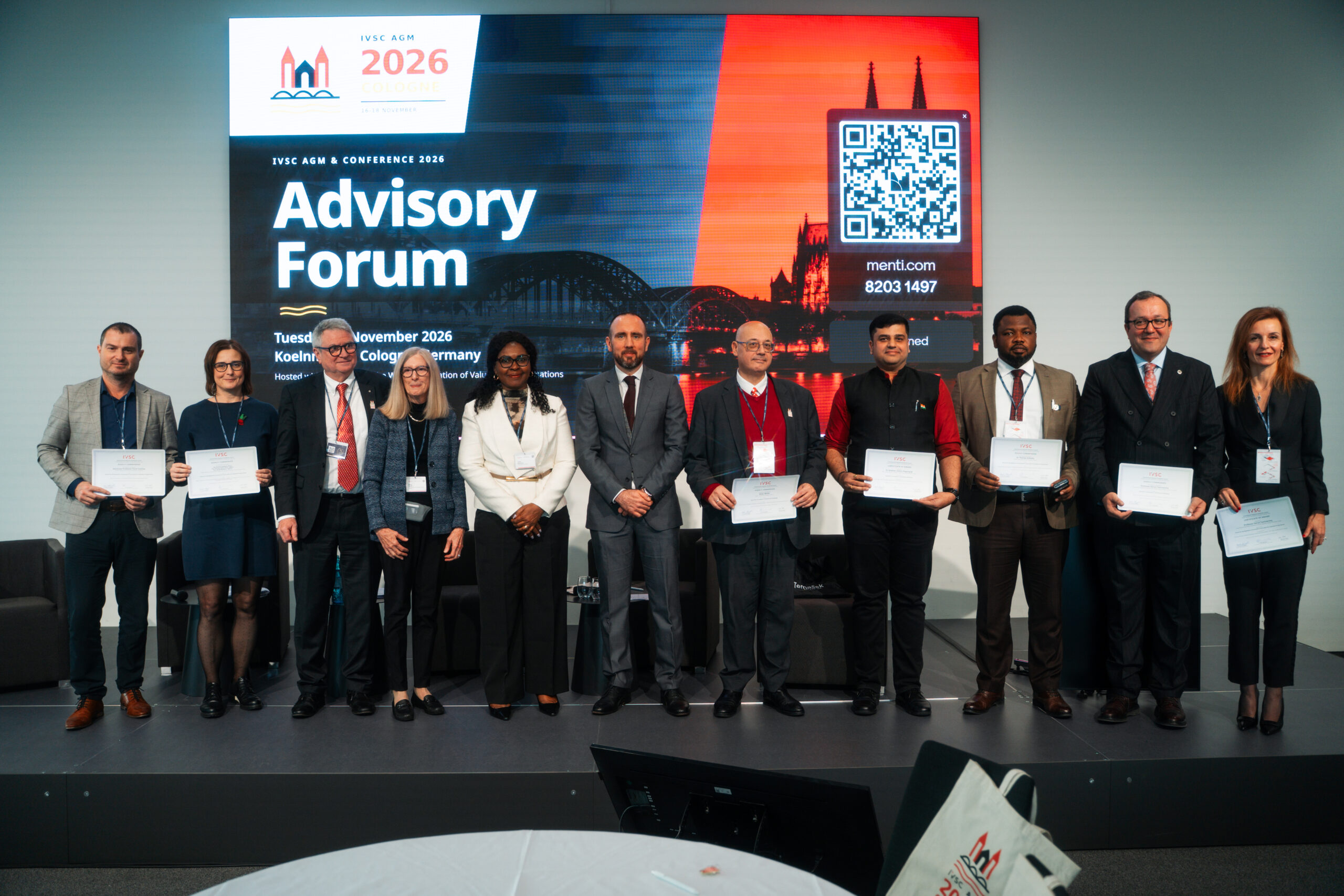
The winners were announced at the IVSC Annual General Meeting in Cologne on Tuesday 17 November 2026, during the Advisory Forum. The Forum brings together representatives of IVSC member and sponsor organisations from around the world, including valuation professional organisations, professional services firms, academia, standard setters, regulators and end users of valuations.
Run by the IVSC Academic Forum, the Showcase recognises the educators who are shaping the profession through the curricula they design, the way they teach and the way they assess. Awards were made in three categories, alongside twelve entries the judges rated highly commended.
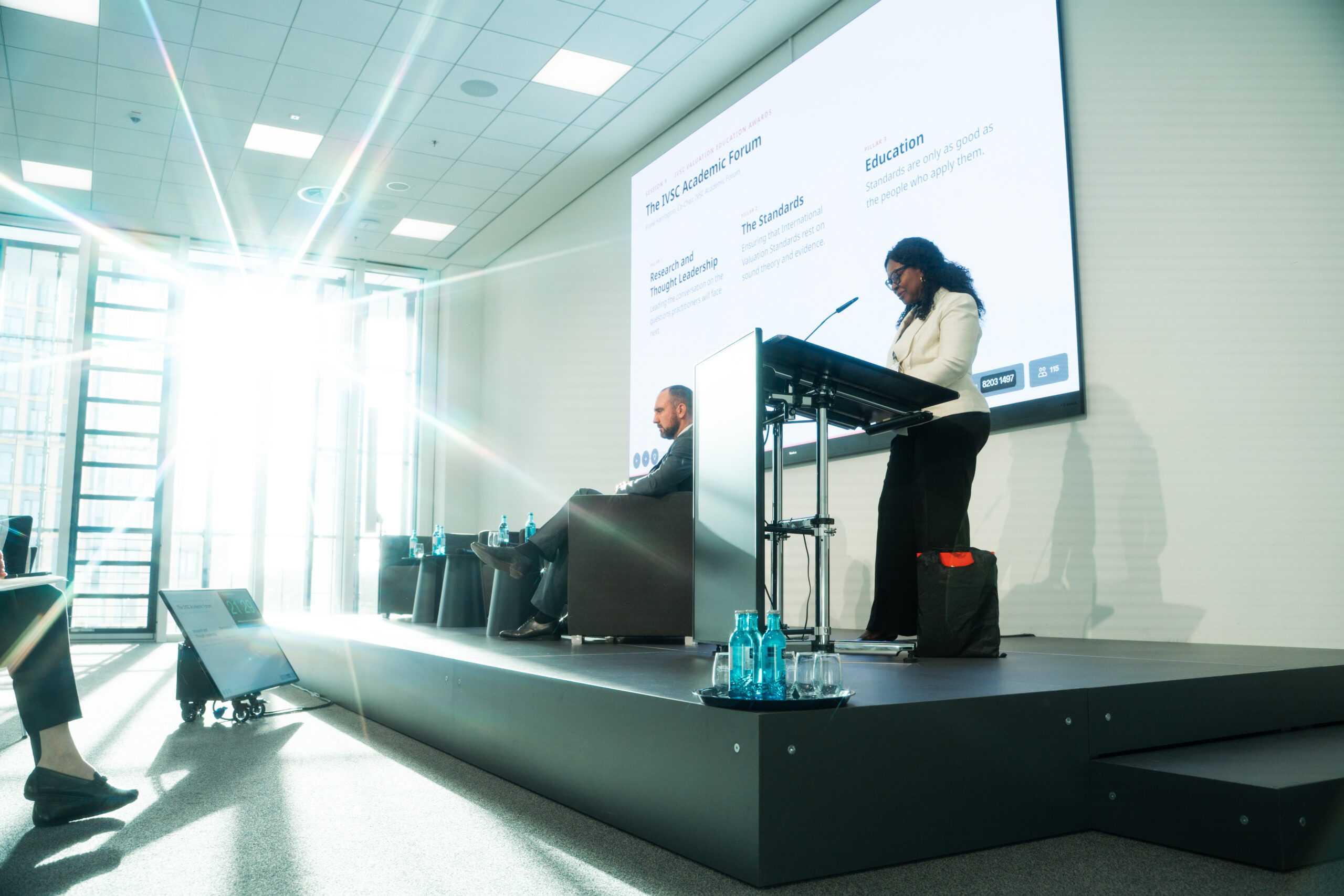

Dr Frank Harrington
Co-Chair, IVSC Academic Forum
Dr Uche Egwuatu
Chair, Education Committee, IVSC Academic ForumWhy We Created the Showcase
We can have the best standards in the world, but they are only as good as the people who apply them. Those people are formed in lecture theatres, studios and seminar rooms long before they sign their first report, and the educators who shape them rarely receive recognition beyond their own institutions. We created the Showcase to change that.
We set ourselves four aims for this first year: to celebrate excellence, to build a global community of valuation educators, to bring teaching into closer alignment with IVS, and to strengthen the link between education and professional practice.
This was a pilot, and we honestly did not know what response to expect. We received more than forty entries. Those that went forward to judging came from sixteen countries across five continents – from leading business and finance schools, from built environment and surveying departments, and from technical and polytechnic institutions. The standard was high throughout, and in one category the judges could not separate the two leading entries.
What impressed us most was how much excellent practice already exists, and how rarely it travels. The Showcase is there to share what works, so that good practice in one programme can inform teaching everywhere. We hope this is the first of many years, and that many more educators will share their work with us.
Category 1: Award for Development of Innovative Curriculum for Valuation Programmes
This award recognises curricula that go beyond a traditional syllabus – built around the learner and clear outcomes, and responsive to change in the profession, from standards and ethics to data, sustainability and AI.
What the judges looked for
A coherent, well-designed programme, closely aligned with valuation competencies and with IVS, that looks ahead. The judges considered how well it supports students as they progress, and looked for evidence that it has been put into practice, has made a difference and could be adapted elsewhere.
Highly Commended
- Dr Shekhar Vishnu NagargojeRICS School of Built Environment, Amity University Maharashtra, India
- Associate Professor Pavel SvačinaPrague University of Economics and Business, Czechia
- Matthew MyersHeriot-Watt University Dubai, United Arab Emirates
- Dr Jacqueline GarnerGeorgia Institute of Technology, United States
- Dr Thomas AshaoluFederal University of Technology, Ilaro, Nigeria
- Dr Barbora Rydlova, Dr Jaroslav Kaizr and David MazáčekPrague University of Economics and Business, Czechia
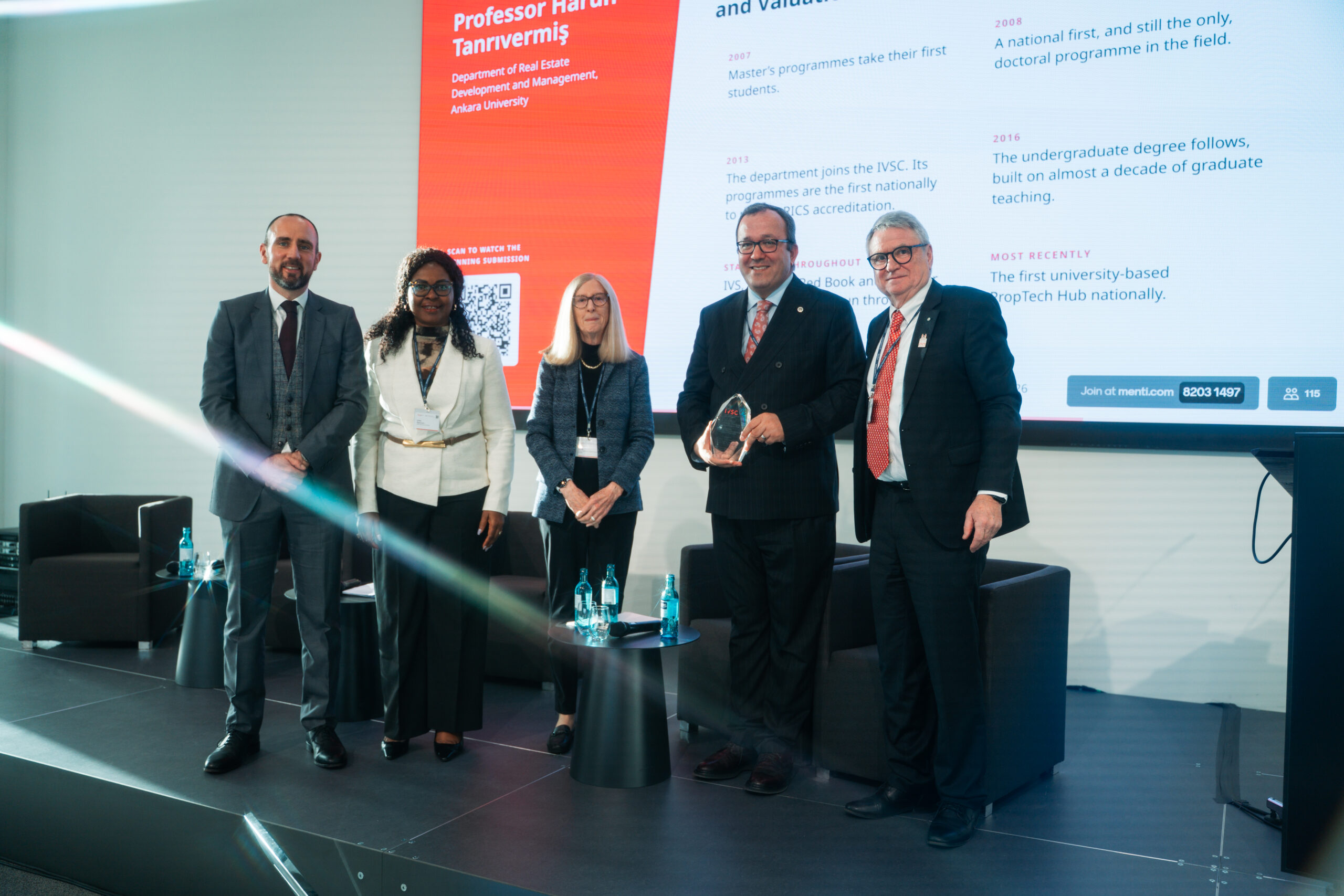
Professor Harun Tanrıvermiş
Department of Real Estate Development and Management, Ankara University, Türkiye
Building Türkiye’s academic pathway in real estate and valuation
When Professor Tanrıvermiş began this work in 2007, valuation was not taught in Türkiye as a subject in its own right. He set out to build a complete academic pathway from first principles. The master’s programmes took their first students in 2007, followed a year later by Türkiye’s first – and still its only – doctoral programme in the field, and an undergraduate degree in 2016.
IVS, the RICS Red Book and IFRS fair value requirements run through the modules rather than sitting in a single course. The department joined the IVSC in 2013, its programmes were the first in Türkiye to receive RICS accreditation, and it has since opened the country’s first university-based PropTech Hub.
Learn more about this submission in a short video presentationThe breadth of this curriculum, and the care with which it takes students from foundations to specialist study and research, are remarkable. Supported by independent evidence of its quality, it is a model that others could follow.
The judging panel
Category 2: Award for Innovation in Teaching and Pedagogy
This award recognises teaching that is active, centred on the student and relevant to practice – teaching that moves beyond the lecture through case-based and simulation-based learning, modules built with industry, and approaches that work for a diverse range of learners.
What the judges looked for
A clear approach, closely linked to real-world practice, professional judgement, standards and ethics; teaching that is genuinely engaging; and evidence of its impact on learning.
Highly Commended
- Professor Harun Tanrıvermiş and Professor Yeşim TanrıvermişAnkara University, Türkiye
- Dr Moritz WagnerUniversity of Canterbury, New Zealand
- Solon MolhoDeree – The American College of Greece
- Professor Monika PodwórnaWrocław University of Science and Technology, Poland
- Professor PiYing (Peddy) LaiNational Pingtung University, Taiwan
The judges could not separate the two leading entries in this category and made a joint award. What stood out in both was the same thing: students are asked to exercise professional judgement, as valuers must, rather than simply apply a model.
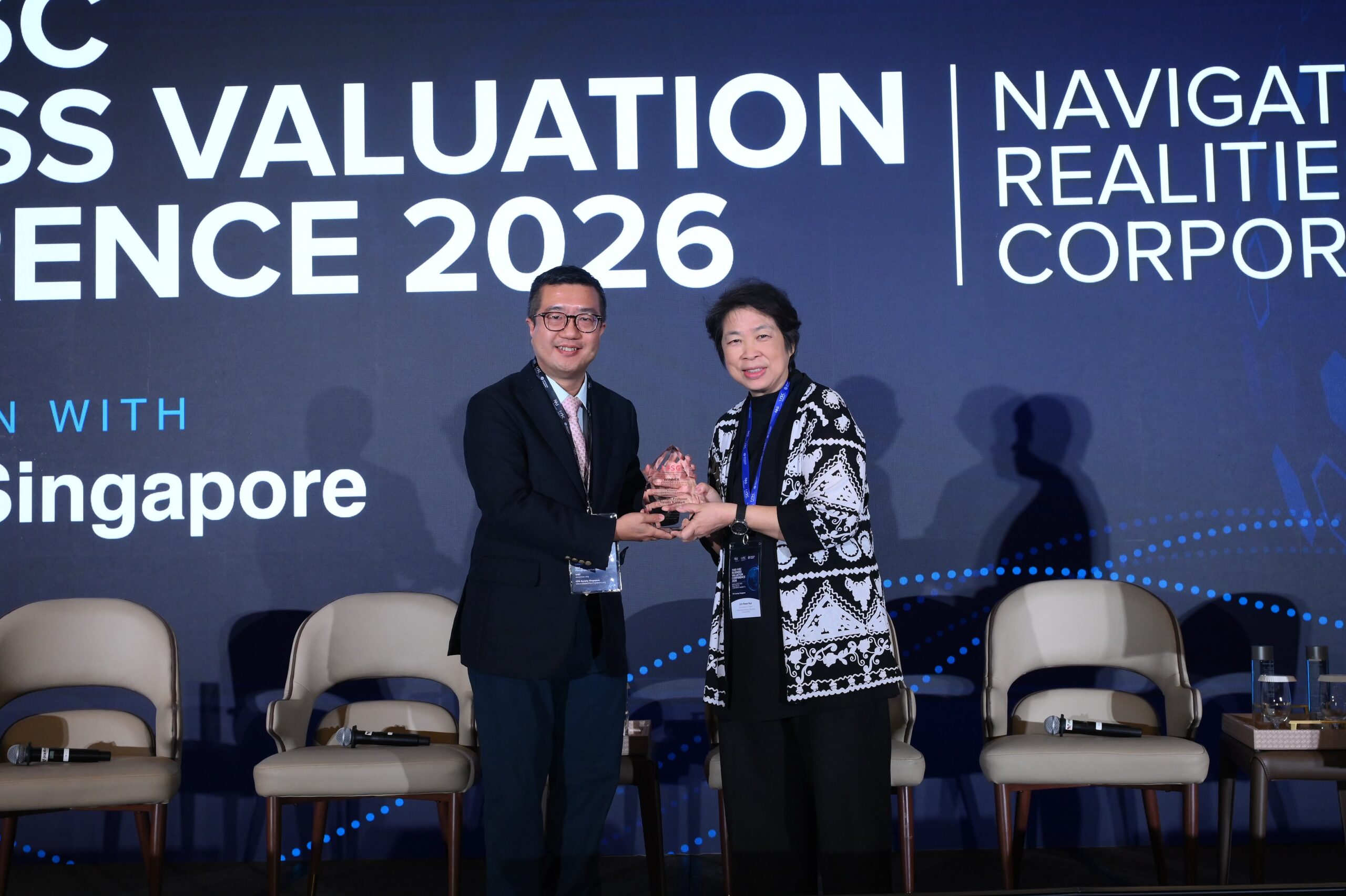

Associate Professor Yuanto Kusnadi
Singapore Management University
From Valuation Classroom to Practice
An industry-integrated learning model that runs across an undergraduate valuation course and a postgraduate financial management course, built on a simple idea: valuation is best learned by doing it. Students value real companies rather than textbook cases, build their own forecasts and assumptions, test alternative approaches, write a professional-style report and defend their conclusions.
IVS is applied in the course of that work rather than taught on its own. Practitioners from EY and ACCA lead sessions on intangible assets and start-ups, EY managers and directors judge students’ presentations, and students have gone on to internships and associate roles in EY’s valuation team.
Learn more about this submission in a short video presentationThis entry asks students to do what valuers do – value real businesses, build and defend their own assumptions, and put their conclusions in front of practitioners. The link between the classroom and professional practice is exceptional.
The judging panel
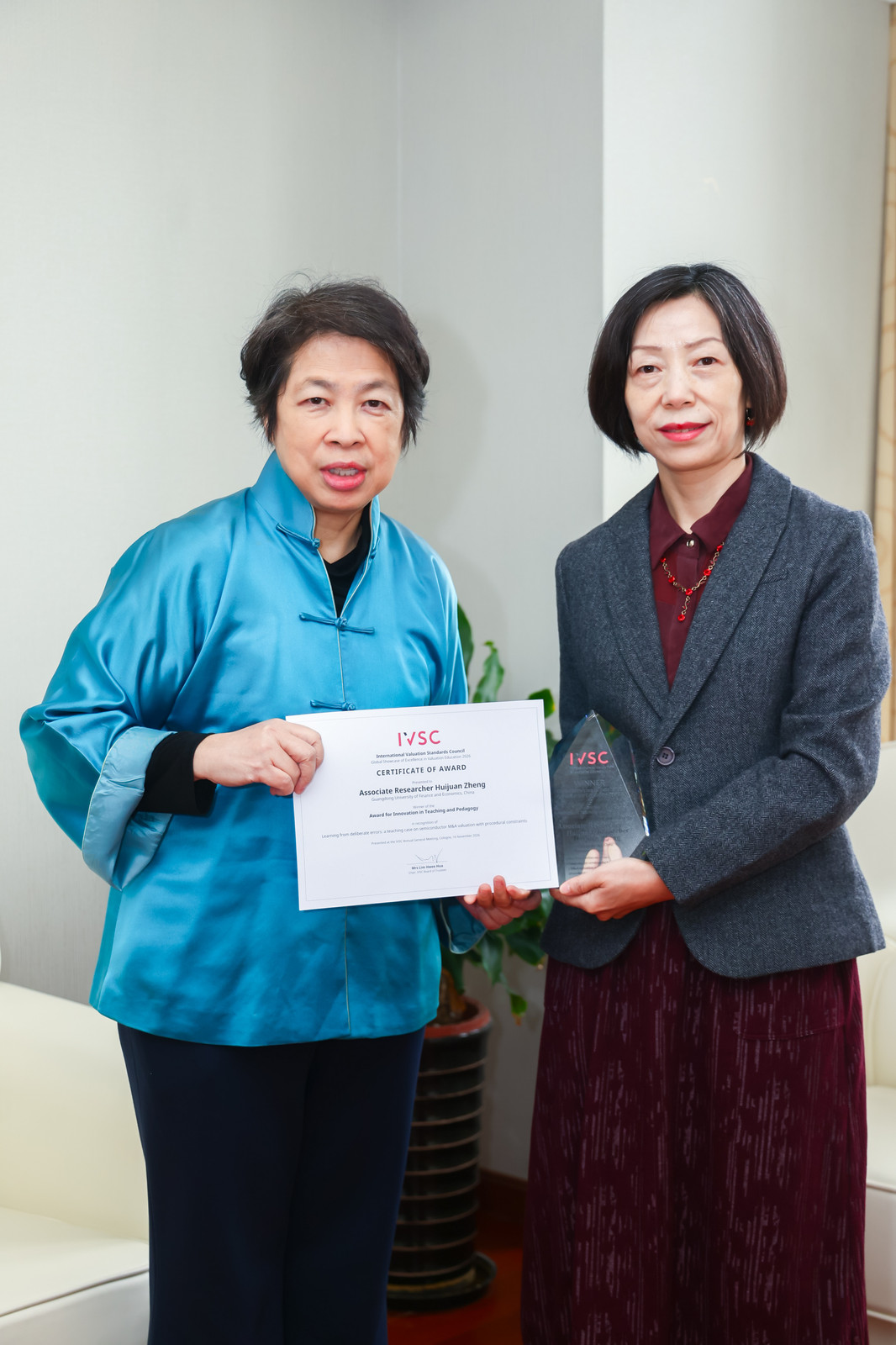
Associate Researcher Huijuan Zheng
Guangdong University of Finance and Economics, China
Learning from deliberate errors
Students receive what appears to be a complete valuation report for a semiconductor acquisition. They are not told that several valuation procedures have been deliberately left out. Working in groups, they must find what is missing, assess the risks, design alternative procedures and revise the assumptions.
Marks reward well-argued reasoning rather than a single right answer, and practising valuers teach alongside university staff, bringing the expectations of the profession directly into the classroom.
An ingenious way to teach professional scepticism – asking students to look hard at a report that appears to be sound. By rewarding reasoning over a single right answer, it develops exactly the judgement the profession depends on.
Category 3: Award for Innovation in Learning Assessment
This award recognises ways of assessing students that are authentic, relevant to professional practice and well supported by feedback – using technology and new methods where they genuinely improve learning.
What the judges looked for
An assessment strategy that is clearly designed and aligned with learning outcomes; that uses new methods with a clear purpose; that reflects real valuation tasks, professional judgement, standards and ethics; that improves learning and feedback; and that others could adapt.
Highly Commended
- Professor Harun TanrıvermişAnkara University, Türkiye – for the Live-Data & Defence assessment protocol developed in the department’s PropTech Hub
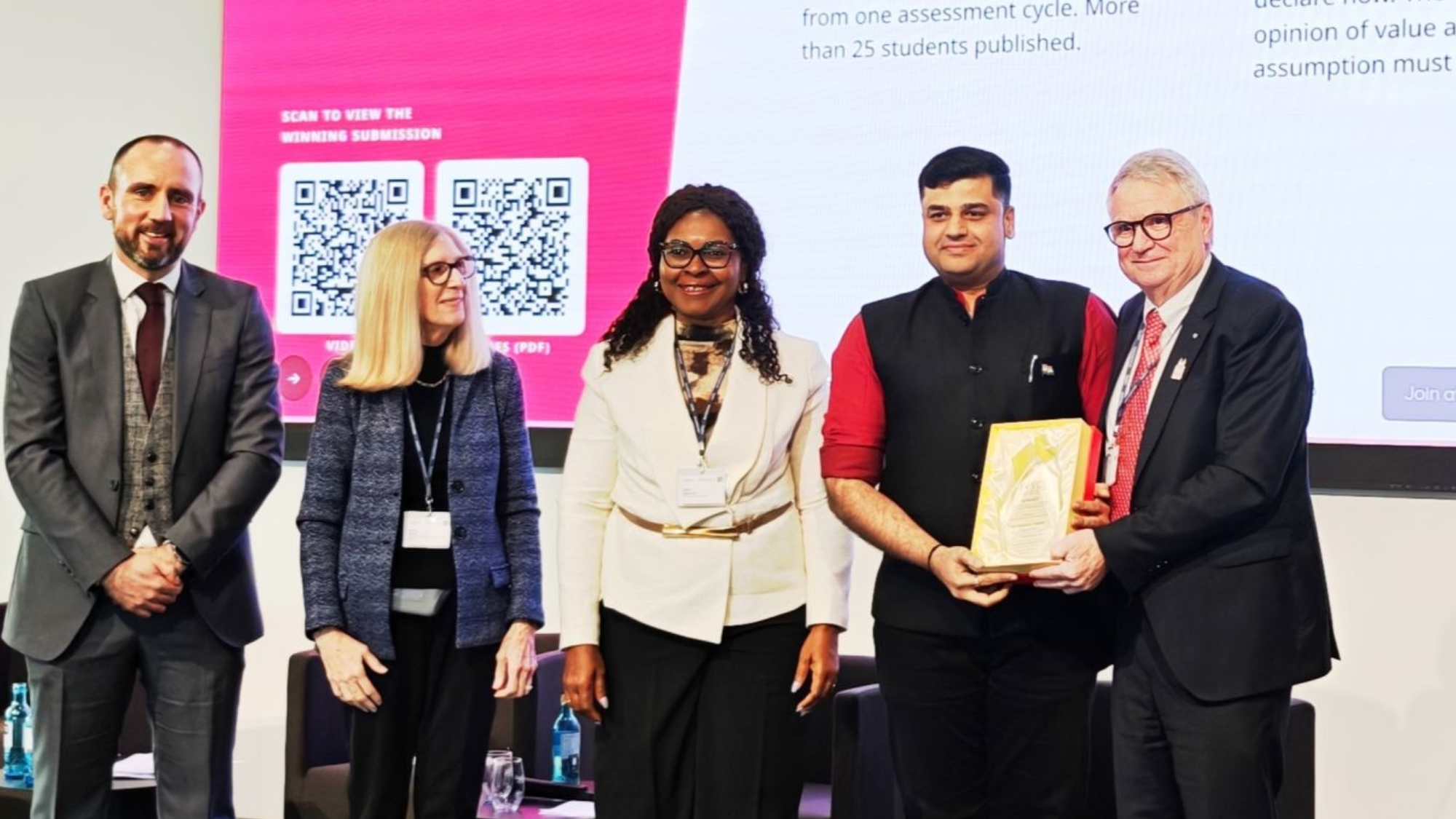
Dr Shekhar Vishnu Nagargoje
RICS School of Built Environment, Amity University Maharashtra, India
The Real Estate Case Study assessment model and the 2026 Professional Consultancy Assessment
Instead of answering hypothetical questions with known answers, each student team is given a real local property market and assessed on a complete professional study: market analysis, financial feasibility, and a highest-and-best-use analysis or valuation using residual, income and discounted cash flow methods consistent with IVS. The standard asked of students is that of published work – one assessment cycle alone produced four peer-reviewed journal articles, and more than 25 students have now been published.
The 2026 Professional Consultancy Assessment carries the same approach into the age of AI. Students prepare an advisory report on a live site, collect their own data in the field and defend their valuation before a committee. They may use AI tools but must declare how – the inspection, the opinion of value, the choice of comparables and every assumption must be their own.
Learn more about this submission in a short video presentationThis assessment closely mirrors the work of a valuation consultancy, and gives a clear, practical answer to a question every educator now faces: how to assess judgement when AI is available to students. Any programme with a local market could adopt it.
The judging panel
The Judging Panel
The IVSC thanks the judges, who gave a great deal of time and care to this first year, and the members of the Steering Committee who managed the entries and the judging.

Ben Elder
Former Global Valuation Director, RICS, and former Chair of the IVSC Tangible Assets Standards Board
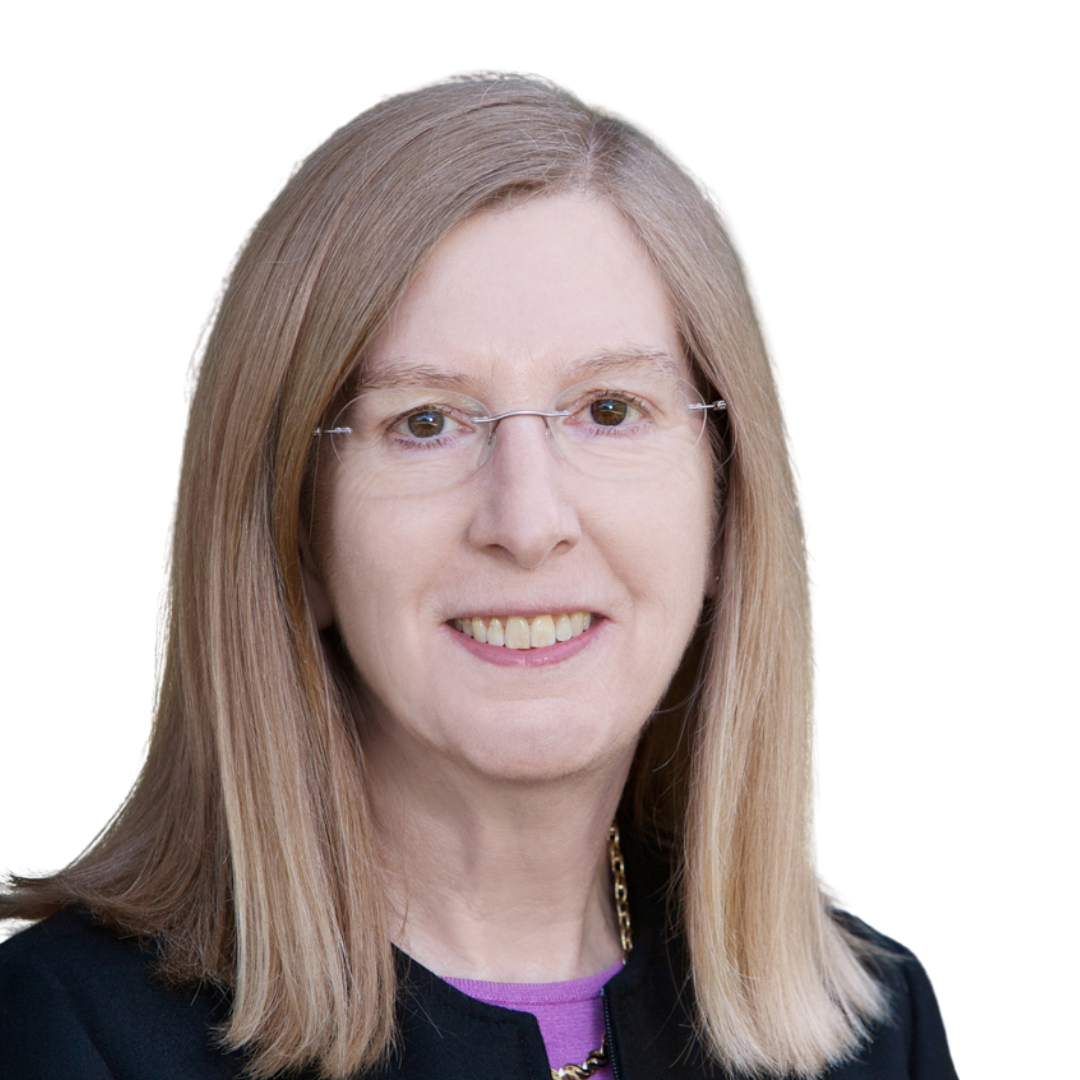
Professor Mary Barth
Emerita Professor, Stanford Graduate School of Business; IVSC Trustee

Professor Mauro Bini
Co-Chair, IVSC Academic Forum; Professor of Corporate Finance, Bocconi University

Dr Catherine Deegan
Faculty Head of Teaching and Learning, Technological University Dublin

Professor Iyenemi Ibimina Kakulu
Professor of Land Management and Valuation, Rivers State University, Nigeria
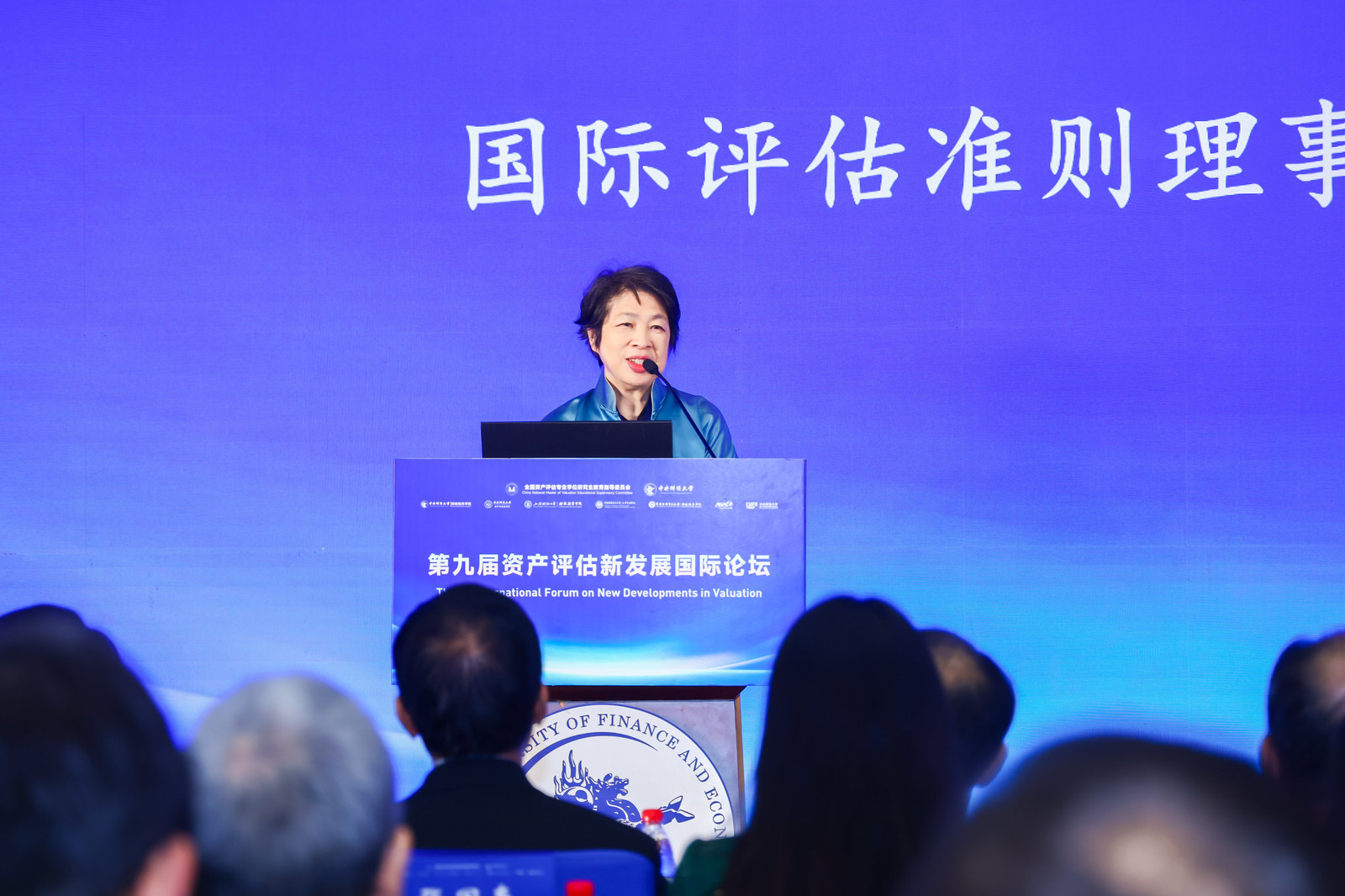
On behalf of the Board of Trustees, I congratulate our winners and everyone whose work was highly commended, and I thank every educator who took the time to enter in this first year.
Together, these entries show a valuation education landscape of real quality – at the cutting edge in what is taught, in how courses are designed and delivered, in how teaching is innovating, and in the way students learn the judgement the profession depends on. They are examples that institutions and countries around the world can look to as they build the education available to the valuers of the future.
Mrs Lim Hwee HuaChair of the IVSC Board of Trustees